
PULL · 10 JUN 2003 This was
This was
your sky.
Zooming in on the First Stars
NASA APOD · Visualization: Ralf Kaehler (ZIB) & Tom Abel (Penn. State) Simulation: Tom Abel (Penn. State), Greg Bryan (Oxford) & Mike Norman (UCSD)
COSMIC MESSAGE
Astronomers are making progress in understanding the first stars. No known stars are made of primordial gas, as all stars around us contain heavier elements. Our Sun is thought to be a third-generation star, and many second-generation stars are seen in globular clusters. Recent WMAP satellite images of the cosmic microwave background provide clues about this early period.
CREDIT
© COPYRIGHTED Visualization: Ralf Kaehler (ZIB) & Tom Abel (Penn. State) Simulation: Tom Abel (Penn. State), Greg Bryan (Oxford) & Mike Norman (UCSD) · Visualization: Ralf Kaehler (ZIB) & Tom Abel (Penn. State) Simulation: Tom Abel (Penn. State), Greg Bryan (Oxford) & Mike Norman (UCSD) · used by permission via NASA APOD · not for redistribution. · View source
EXPORT AS
SB-2003-06-10
©
COMMON 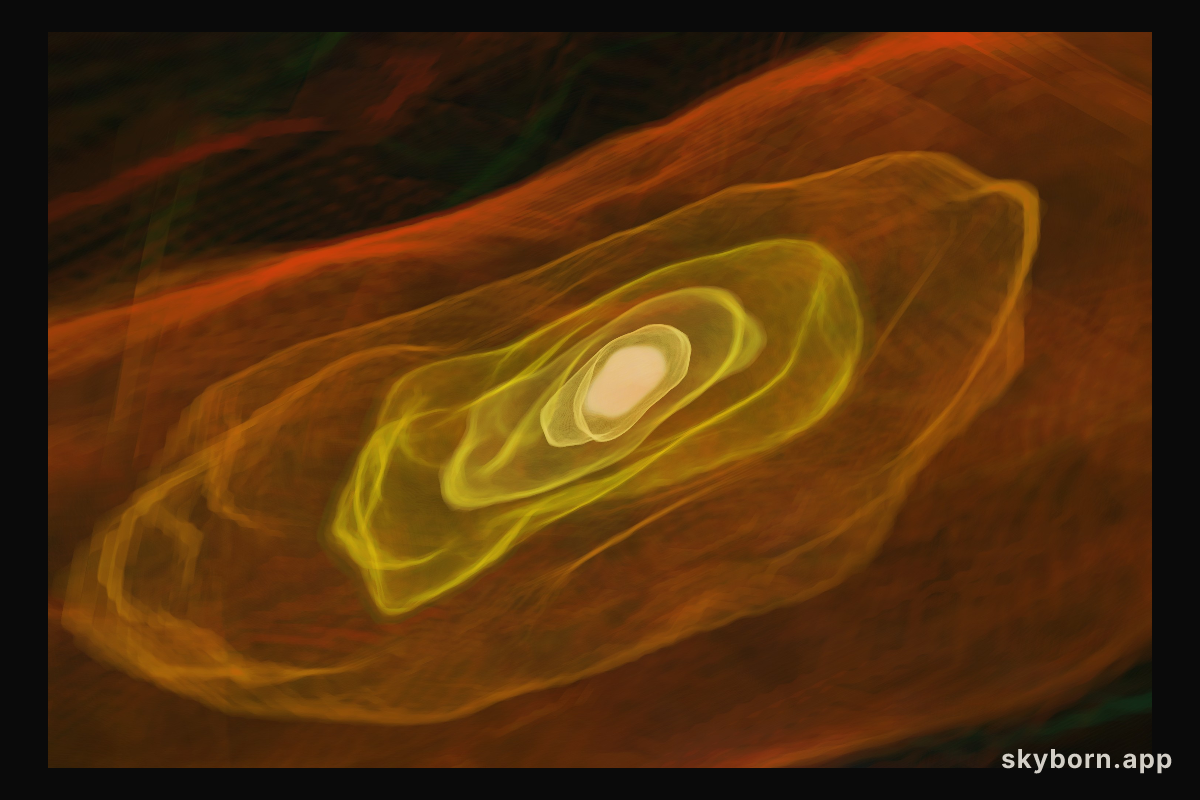

2003-06-10 · ♊
SKYBORN
Zooming in on the First Stars
NASA APOD · Visualization: Ralf Kaehler (ZIB) & Tom Abel (Penn. State) Simulation: Tom Abel (Penn. State), Greg Bryan (Oxford) & Mike Norman (UCSD)
BORN 8510 days ago
SKYBORN.APP
ZODIAC CONTEXT
♊
GEMINI
In tropical astrology, 10 JUN 2003 falls under Gemini (♊). The sign's window runs from 05-21 through 06-20. Gemini is named for the twin stars Castor and Pollux, both bright enough to spot without a telescope. The Sun was crossing this region of the sky on 10 JUN 2003.
THE ALMANAC FOR 10 JUN 2003
DAY
Tuesday
MOON
Waxing gibbous, 80% lit
POSITION
Day 161 of 365
SAME DAY, OTHER YEARS