
The sky on
your birthday.
Heating Coronal Loops
The Sun's corona, the faint, hot outer atmosphere, is hundreds of times hotter than its surface. Astronomers use satellites like TRACE to study coronal loops, which are giant arcs of plasma shaped by magnetic fields. These loops are key to understanding the corona's extreme temperature. This image shows the intricate structure of these loops.
We cannot put this date's photograph on paper at poster size. We can print the nearest public archive plate to your date instead.
See print sizesPrinted, shipped and sold by Zazzle


Released on your day
Space pictures released on your month and day in other years, or a few days either side. Each one is sharp enough to print as a poster.
-
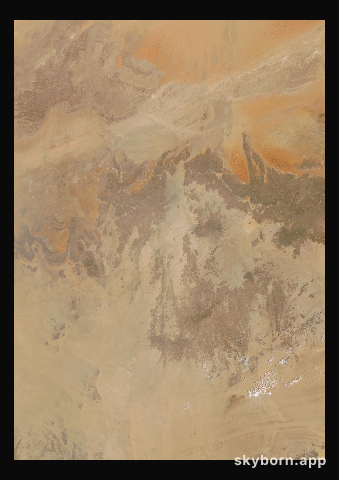 The Earth on your day The Earth on 14 August 2005 · Sahara, Algeria See it as a poster
-
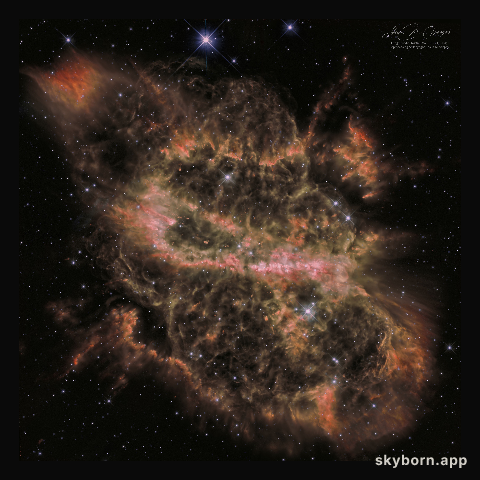 Released on 14 August 2020 NGC 5189: An Unusually Complex Planetary Nebula See it as a poster
-
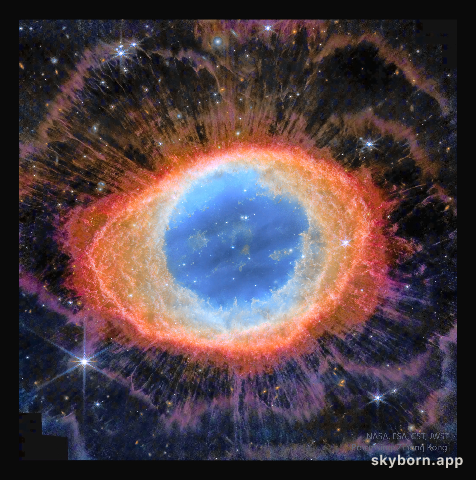 Released on 14 August 2023 The Ring Nebula from Webb and Hubble See it as a poster
-
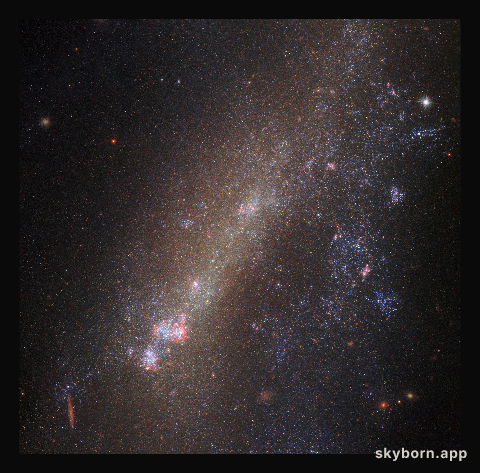 Released on 14 August 2017 A distorted duo See it as a poster
-
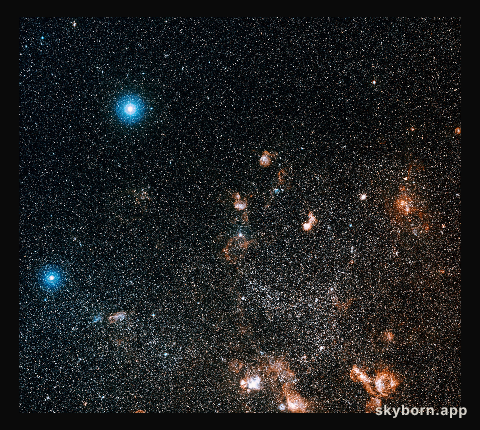 Released on 14 August 2006 Large and small stars in harmonious coexistence (ground-based image) See it as a poster
-
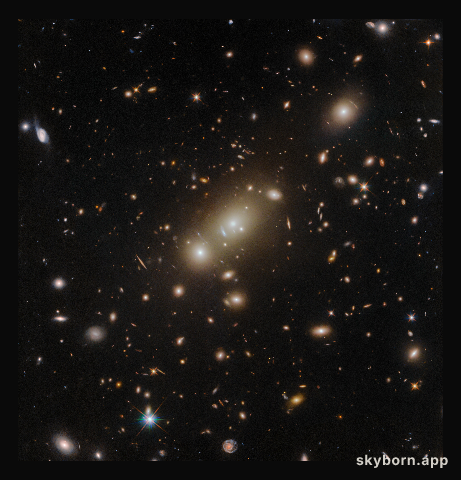 Released on 14 August 2023 A clear view of a galaxy cluster See it as a poster
In tropical astrology, 14 AUG 2005 falls under Leo (♌). The sign's window runs from 07-23 through 08-22. Leo is anchored by Regulus, the heart of the Lion, twenty-four parsecs from Earth. The Sun was crossing this region of the sky on 14 AUG 2005.
Questions about August 14, 2005
What space photo was released on August 14, 2005?
NASA's Astronomy Picture of the Day for August 14, 2005 was "Heating Coronal Loops". It's the card at the top of this page.
What was the Moon's phase on August 14, 2005?
A first quarter moon, about 68% lit.
What day of the week was August 14, 2005?
August 14, 2005 was a Sunday, day 226 of the 365 days in 2005.
Was there a meteor shower on August 14, 2005?
Yes: the Perseid shower, peaked yesterday.
What did the Sun and the Earth look like on August 14, 2005?
NASA's Terra satellite photographed the whole Earth that day. It's on this page, next to the card.
Is it free?
Yes. Seeing, sharing and downloading the card is free, and there's no account to make.