
The sky on
your birthday.
Filaments in the Cygnus Loop
These delicate filaments are part of the Cygnus Loop, a supernova remnant. This Hubble Space Telescope close-up shows a small portion of the immense shock front. It moves at about 170 kilometers per second, glowing in light from excited atoms.
We cannot put this date's photograph on paper at poster size. We can print the nearest public archive plate to your date instead.
See print sizesPrinted, shipped and sold by Zazzle


Released on your day
Space pictures released on your month and day in other years, or a few days either side. Each one is sharp enough to print as a poster.
-
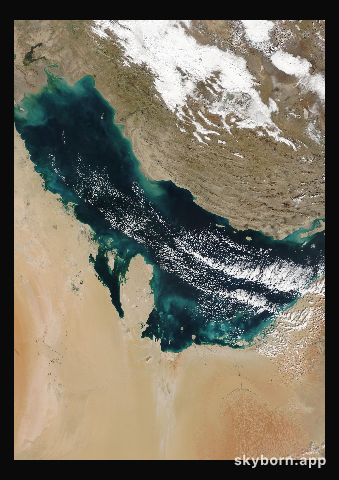 The Earth on your day The Earth on 18 January 2003 · Persian Gulf See it as a poster
-
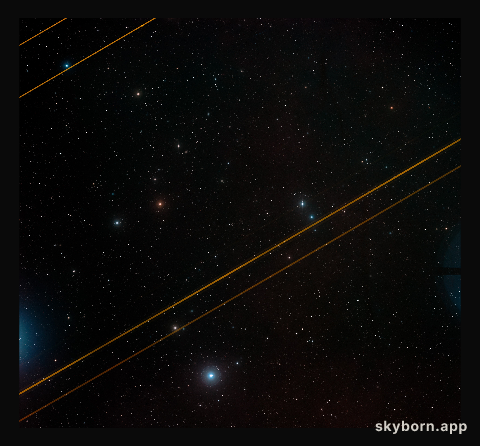 Released on 18 January 2018 Wide-field view of Abell 1758 (ground-based view) See it as a poster
-
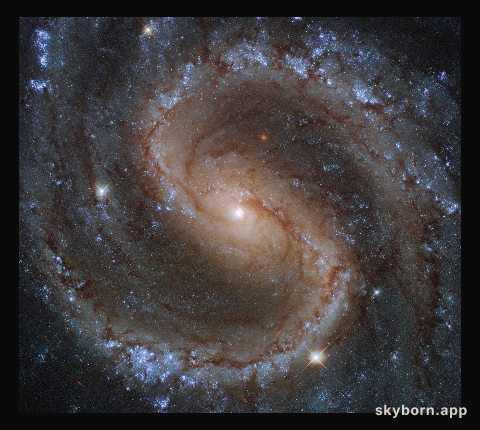 Released on 18 January 2021 Colours of the Lost Galaxy See it as a poster
-
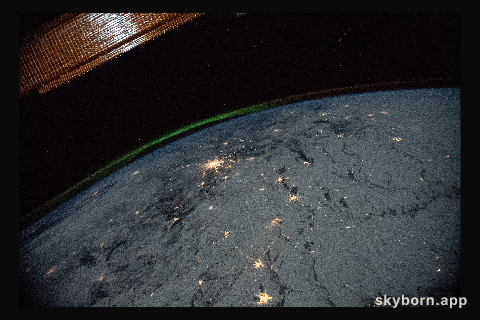 Released on 18 January 2019 View of the Earth's limb with an aurora See it as a poster
-
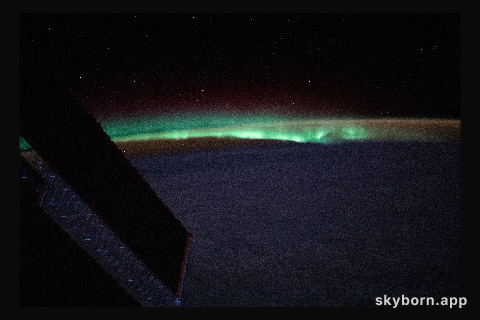 Released on 18 January 2021 Earth's atmospheric glow and the aurora blanket the horizon as the International Space Station orbited 263 miles See it as a poster
-
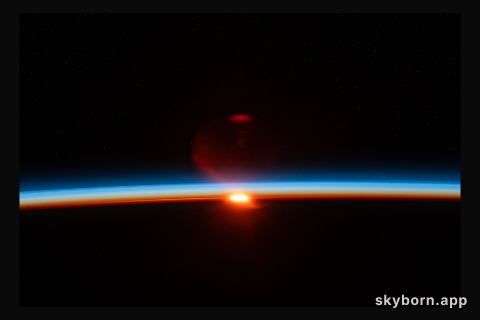 Released on 18 January 2024 The sun's last rays illuminate Earth's atmosphere and refract in the camera lense in this photograph of an orbital See it as a poster
In tropical astrology, 18 JAN 2003 falls under Capricorn (♑). The sign's window runs from 12-22 through 01-19. Capricorn is the dimmest zodiac constellation, but rich in deep-sky objects south of the celestial equator. The Sun was crossing this region of the sky on 18 JAN 2003.
Questions about January 18, 2003
What space photo was released on January 18, 2003?
NASA's Astronomy Picture of the Day for January 18, 2003 was "Filaments in the Cygnus Loop". It's the card at the top of this page.
What was the Moon's phase on January 18, 2003?
A full moon, about 100% lit.
What day of the week was January 18, 2003?
January 18, 2003 was a Saturday, day 18 of the 365 days in 2003.
What did the Sun and the Earth look like on January 18, 2003?
NASA's Terra satellite photographed the whole Earth that day. It's on this page, next to the card.
Is it free?
Yes. Seeing, sharing and downloading the card is free, and there's no account to make.