
The sky on
your birthday.
Cosmic Rays and Supernova Dust
Cosmic rays, high-energy particles traveling near light speed, constantly bombard Earth. Discovered in 1912, their source was a long-standing mystery. A theory suggests these particles are atomic nuclei blasted from dust grains formed in supernovae. This illustration shows a supernova explosion and its expanding cloud of ejecta.
We cannot put this date's photograph on paper at poster size. We can print the nearest public archive plate to your date instead.
See print sizesPrinted, shipped and sold by Zazzle


Released on your day
Space pictures released on your month and day in other years, or a few days either side. Each one is sharp enough to print as a poster.
-
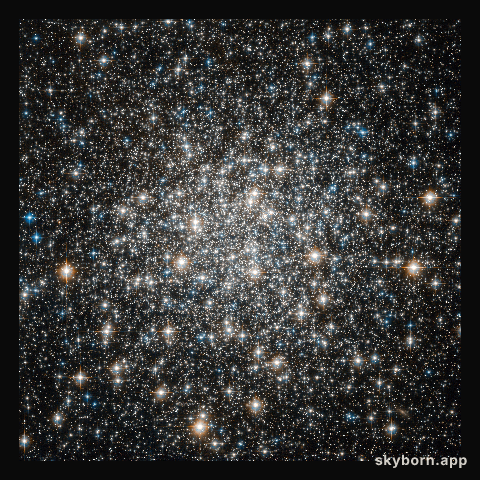 Released on 18 June 2012 Globular cluster M 10 See it as a poster
-
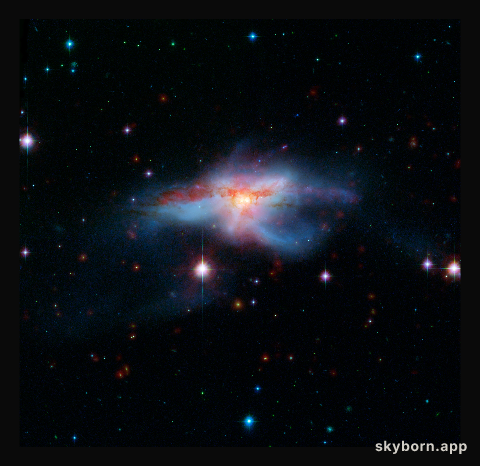 Released on 18 June 2009 NGC 6240: Merging Galaxies See it as a poster
-
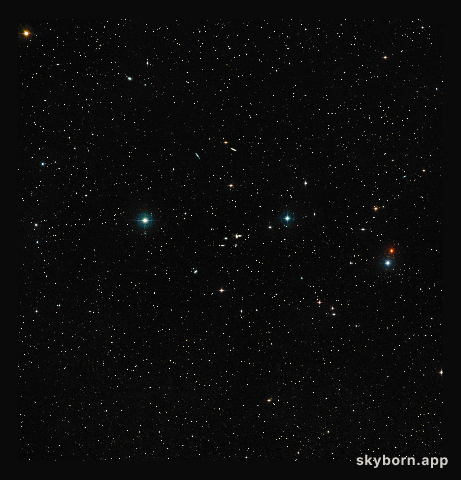 Released on 18 June 2015 Wide-field view of galaxy group HCG 16 (ground-based view) See it as a poster
-
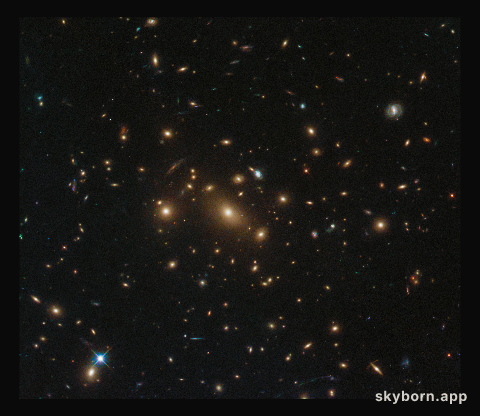 Released on 18 June 2018 One galaxy, three supernovae See it as a poster
-
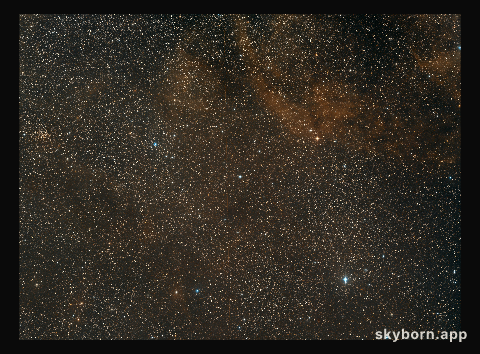 Released on 18 June 2020 Wide-field image of NGC 7027 (ground-based image) See it as a poster
In tropical astrology, 18 JUN 1998 falls under Gemini (♊). The sign's window runs from 05-21 through 06-20. Gemini is named for the twin stars Castor and Pollux, both bright enough to spot without a telescope. The Sun was crossing this region of the sky on 18 JUN 1998.
Questions about June 18, 1998
What space photo was released on June 18, 1998?
NASA's Astronomy Picture of the Day for June 18, 1998 was "Cosmic Rays and Supernova Dust". It's the card at the top of this page.
What was the Moon's phase on June 18, 1998?
A last quarter moon, about 37% lit.
What day of the week was June 18, 1998?
June 18, 1998 was a Thursday, day 169 of the 365 days in 1998.
Is it free?
Yes. Seeing, sharing and downloading the card is free, and there's no account to make.